
STAR method interview questions: How to answer them with real examples
 Roonan Lingam
15 min read
Roonan Lingam
15 min read
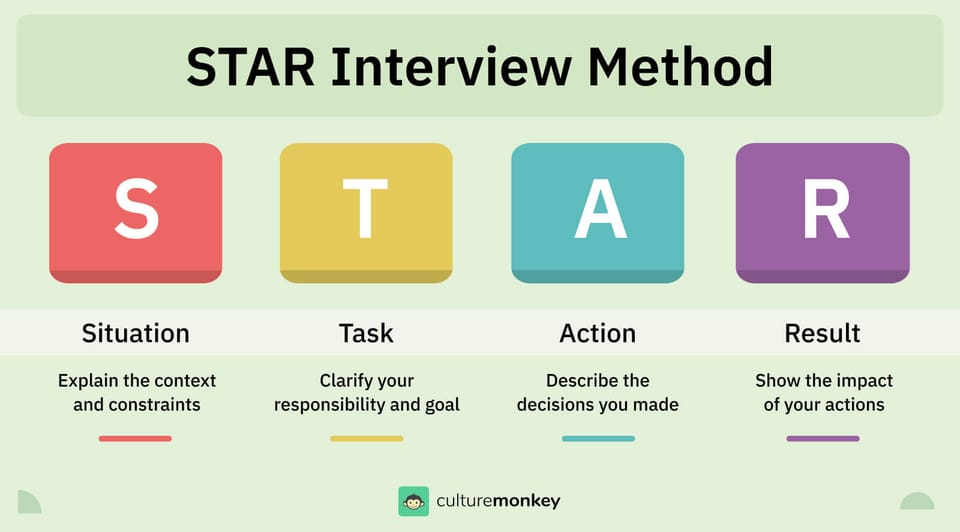
Hiring interviews often fail for a simple reason. Candidates talk a lot, but clarity is missing. Answers drift, jump between points, or stay abstract. As a result, interviewers are left guessing what the candidate actually did.
STAR method interview questions exist to remove that ambiguity. They force structure into responses by separating context, action, and outcomes. For employers, this turns interviews from subjective impressions into comparable signals.
When candidates use STAR well, patterns emerge quickly. You can see how they think, make decisions, and execute under real-world conditions. That is why structured questioning has become essential for making consistent and fair hiring decisions.
- STAR method interview questions bring structure to behavioral interviews by forcing clear links between situation, action, and outcome.
- Structured STAR questions help interviewers compare candidates fairly and reduce reliance on instinct or storytelling skills.
- Strong STAR answers show decision-making, ownership, adaptability, and learning through concrete examples.
- Common mistakes include missing context, weak outcomes, vague ownership, or defensive explanations.
- When used well, STAR-based interviews improve hiring accuracy by focusing on repeatable behavior, not surface confidence.
What are STAR method interview questions?

STAR method interview questions work like a built-in evaluation lens during a job interview. Instead of letting answers drift, they guide candidates through a clear sequence that shows cause and outcome. This makes behavioral interviews easier to assess and reduces reliance on gut feeling.
At a practical level, the STAR interview technique asks candidates to describe a real situation, explain their role, outline actions taken, and share results. This helps interviewers connect responses back to the job description and understand how someone handled similar moments in a previous job.
When answering behavioral interview questions this way, details matter more than delivery. STAR interview questions surface communication skills, decision-making, and follow-through because behavioral questions demand examples, often framed as “about a time” something meaningful happened.
Used consistently, STAR interview questions create fair comparisons across candidates. Strong STAR method interview questions examples reveal patterns in how people think and act, making interview questions a reliable way to evaluate real capability, not rehearsed confidence.
5 Common STAR interview questions for first interviews

Common STAR interview questions are like a stress test for hiring decisions. Just as a pilot runs simulations before a real flight, interviewers use scenarios to see how choices lead to outcomes. The goal is not perfect answers, but clear thinking, cause-and-effect reasoning, and signals that job seekers will repeat in their next job interview.
1. Problem-solving & decision-making
These job interview questions focus on how candidates approach problem-solving when information is incomplete. Answers often involve fixing a broken flow, handling a tight deadline, or protecting a major client.
Strong STAR answers show how options were weighed, why one path was chosen, and what result followed.
2. Teamwork & conflict
This set of interview questions looks at how someone works with a team member when priorities clash. Common STAR method interview questions surface listening habits, negotiation, and accountability.
Instead of harmony stories, interviewers learn how disagreement was handled, what changed afterward, and whether trust improved or weakened.
3. Pressure & adaptability
STAR method behavioral interview questions explore reactions when plans fall apart. Candidates may describe sudden scope changes, urgent requests, or shifting expectations.
The best responses explain how priorities were reset, communication adjusted, and results delivered anyway, which signals readiness for real pressure beyond rehearsed responses.
4. Achievement & failure
Many common STAR interview questions ask candidates to give an example of success or failure. STAR method interview questions and answers here reveal ownership and learning.
Interviewers listen for what worked, what broke, and how the candidate adjusted next time instead of blaming circumstances.
5. Leadership & initiative
These questions test influence without relying on titles. Using the STAR interview method, candidates explain moments they stepped up, guided others, or acted early.
Strong answers show judgment, timing, and follow-through, helping interviewers assess leadership potential during first-round job interview questions.
Seeing these patterns is only half the work. To get consistent STAR answers, interviewers must frame prompts carefully. Next, we break down how to structure STAR method interview questions so scenarios, actions, and outcomes surface naturally.
How to structure STAR method interview questions?

Structuring STAR questions is like setting camera angles before a live shoot. If framing is sloppy, even strong moments get missed. Clear prompts guide candidates toward cause, action, and result. For interviewers, this contrast turns scattered stories into usable signals, especially across formats like a video interview or early screening rounds.
- Start with the situation: Ask for an example of a time something specific happened. This frames what the STAR method interview questions are in practice and prevents vague answers, helping candidates anchor responses in real events rather than polished summaries.
- Separate action from outcome: Follow up by asking what they personally did and what changed. This teaches how to answer STAR method interview questions clearly, producing compelling answers with positive outcomes instead of shared credit or generic team results.
- Probe for decision logic: Ask why a choice was made, not just what happened. This strengthens answering behavioral questions by surfacing judgment, organizational skills, and trade-offs, especially in STAR method interview questions for leadership or complex scenario contexts.
(Source: MIT)
- Force specificity: Request specific examples, numbers, or constraints to avoid surface-level stories. This works well in a video interview, where STAR method interview questions with sample answers help interviewers compare responses consistently before the next behavioral interview round.
- Close on results and reflection: End by asking what they learned or would change. STAR interview prompts like this reveal growth mindset, social media presence maturity, and practical examples that signal readiness beyond rehearsed talking points answers today.
When these questions are structured well, candidates do more than respond; they demonstrate value. Next, we look at why leaning toward STAR method questions benefits candidates themselves, not just interviewers, across preparation, confidence, and clarity.
Benefits of leaning towards STAR method questions for candidates
Leaning on STAR questions is like switching from guessing a route to using a map. Instead of hoping the interviewer follows your story, the structure guides them. For candidates, this contrast changes interviews from stressful narration into controlled explanations where results lead, causes connect, and confidence comes from clarity in every real interview.
- Clear thinking: Using STAR method interview questions for problem-solving helps candidates answer questions with relevant context, explain choices, and show outcomes. This reduces rambling, supports follow-up questions, and signals hiring managers that decisions hold up in an interview.
- Stronger teamwork stories: STAR method interview questions for teamwork help candidates explain how they handled conflict, shared work, and delivered results across multiple tasks. This structure highlights emotional intelligence, earns positive feedback, and creates a huge difference for hiring managers.
- Safer failure discussions: STAR method interview questions for failure give candidates a way to answer questions about mistakes. By anchoring stories to a project timeline and lessons learned, candidates avoid STAR Method interview questions mistakes and show growth, not defensiveness.
- Better signal in interviews: The STAR framework helps candidates organize examples when juggling multiple tasks. Answers stay focused, relevant context stays intact, and hiring managers can assess impact quickly, even when time is limited or attention shifts during an interview.
- Confidence across formats: Practicing this approach prepares candidates for the next interview, panel rounds, or screens. The STAR method helps answer sound, grounded, and supports social media engagement stories, and shows readiness for a real interview without memorized lines alone.
These benefits explain why candidates often perform better with structure. To evaluate responses fairly, interviewers must know what strong answers look like. Next, we break down the signals and patterns to look for in STAR method interview questions.
Answers to look out for in STAR method interview questions
Evaluating STAR responses is like reviewing a recorded match, not the highlight reel. What matters is sequence, not sparkle. Strong answers show how events unfolded, why choices were made, and what changed after. This contrast helps interviewers separate instinctive storytellers from candidates who act with intent and consistency.
- Clear situation framing: A strong answer begins by describing a time rooted in past situations, not vague claims. When the interviewer asks, candidates ground their stories in the last job moment, relevant context, or working closely with others, avoiding comparisons to unrelated situations.
- Visible decision logic: Effective STAR questions reveal the decision-making process step by step. Candidates explain their thought process, trade-offs, and constraints, showing how they moved from problem to action. Concrete examples matter more than confidence or polished language alone.
- Action ownership: Look for answers where candidates clearly state what they did, not what “we” did. Strong responses show individual responsibility, whether resolving conflict resolution issues, coordinating with a technical expert, or handling pressure while working closely with others.
- Result-driven outcomes: High-quality answers connect actions to outcomes like improved website traffic, stronger company culture, or retained potential clients. These concrete results help interviewers judge impact and soft skills together, instead of guessing value from effort alone.
- Reflection and learning: The best candidates share examples that include learning. They explain what changed afterward, how they would prepare questions differently, or how the experience shaped future behavior, signaling growth rather than defensiveness in STAR method interview questions.
Even strong candidates can weaken their answers with avoidable errors. To assess responses fairly, interviewers must also know what signals poor structure or missing detail. Next, we examine common mistakes candidates might make when answering STAR method interview questions.
Mistakes candidates might make when answering STAR method interview questions

Answering STAR questions is like following a recipe under time pressure. Miss a step, and the outcome suffers. In interviews, small missteps compound quickly. The contrast between clear structure and scattered replies helps interviewers spot who can think through scenarios versus those reacting on instinct.
- Starting without context: Many candidates jump straight to actions and forget to explain the situation. When caught unprepared, answers lack previous experience grounding, making it harder for interviewers to understand why decisions mattered during the interview.
- Overloading with detail: Some answers drown in background stories, sample questions, or side explanations. This hurts clear communication, as interviewers struggle to separate signal from noise and lose track of what the candidate actually did.
- Avoiding ownership: Candidates often describe what “we” handled instead of what they personally did. These answers weaken accountability, especially when explaining technical issues or decisions that required individual judgment.
- Skipping results: A common mistake is ending without outcomes. Answers that fail to explain impact leave interviewers guessing whether actions worked, making it difficult to assess if the candidate is the right person.
- Defensive explanations: When discussing challenges, some candidates justify mistakes instead of reflecting. Strong interviews reward learning and clarity, while defensive answers suggest limited growth from previous experience.
These mistakes make patterns harder to spot at scale. To move beyond subjective judgment, teams need systems that detect behavior trends across responses. Next, we explore how Hummer AI identifies behavioral patterns across STAR interview responses consistently.
How Hummer AI identifies behavioral patterns across STAR interview responses
Using AI to read STAR responses is like reviewing game footage instead of highlights. Rather than trusting impressions, patterns surface across situations, actions, and results. This contrast helps teams move from isolated answers to repeatable signals, showing how candidates think, decide, and deliver outcomes over time with consistency and scale.
- Pattern mapping: Hummer AI compares how candidates describe situations, actions, and results across answers. This reveals consistency in problem-solving skills, accountability, and follow-through, producing key takeaways that go beyond single responses or polished storytelling during structured interviews.
- Sequence scoring: The system checks whether answers follow logical order. When STAR stands for situation, task, action, or result, missing steps become visible, helping teams spot rushed thinking, weak causality, or overreliance on rehearsed answers across multiple interview rounds.
- Decision signals: By tracking verbs and outcomes, Hummer AI highlights how choices were made under pressure. This shows judgment quality, ownership, and adaptability, separating candidates who act decisively from those who narrate without evidence in real scenarios consistently.
- Behavior clustering: Repeated themes across responses are grouped into behavior patterns. Hiring teams see whether collaboration, leadership, or problem-solving skills appear once or repeatedly, which is more predictive than standout moments over time and roles evaluated systematically.
- Bias reduction: Because patterns are measured across answers, individual impressions matter less. This balances subjective reactions, supports fairer shortlists, and helps teams focus on demonstrated behavior rather than confidence alone during high-volume hiring cycles with consistent criteria applied.
Conclusion
STAR method interview questions have become essential because modern hiring demands evidence, not intuition. In fast-moving organizations, decisions based on vague impressions or polished talk create costly mismatches. Structured answers reveal how people think, act, and learn under real conditions. They bring fairness to interviews, consistency across panels, and clarity when comparing candidates with very different backgrounds.
This is where Hummer AI strengthens the process. Instead of reviewing answers in isolation, it identifies patterns across responses at scale.
Hiring teams see how often problem-solving, ownership, adaptability, or follow-through actually appear, not just how well one answer sounded. By translating STAR responses into comparable behavioral signals, Hummer AI helps organizations reduce bias, improve hiring accuracy, and make decisions faster with confidence. In a market where the cost of a wrong hire is high, structured questioning combined with behavioral intelligence is no longer optional. It is a competitive advantage.
FAQs
1. What are the most common STAR method interview questions?
The most common STAR method interview questions focus on problem-solving, teamwork, conflict, pressure, leadership, and failure. They usually begin with prompts like describe a time or give an example, then ask what you did and what changed. Interviewers use these questions to compare real behavior across candidates, rather than relying on confidence, storytelling style, or job titles alone.
2. How do I know if a question requires a STAR answer?
A question requires a STAR answer when it asks about past behavior, not opinions or plans. If the interviewer asks for a specific example, mentions a situation, or follows up with why and what happened next, they expect structure. Those cues signal you should explain context, actions, and results clearly, instead of speaking in general terms.
3. Can the same STAR story be reused for multiple interview questions?
Yes, the same STAR story can be reused when it genuinely fits multiple questions. The key is shifting emphasis, such as highlighting decision-making, teamwork, or learning, while keeping facts consistent. Reuse works best with strong examples that match the role. Avoid forcing a story that only loosely fits, as interviewers notice mismatches quickly.
4. How detailed should answers to STAR interview questions be?
STAR answers should be detailed enough to prove what happened, without overwhelming the listener. Spend one or two sentences on the situation, most time on your actions, and end with results. Strong answers usually last one to two minutes. If you are still explaining the background after thirty seconds, you are sharing too much unnecessarily often.
5. What if I don’t have a perfect example for a STAR question?
You do not need a perfect example to answer STAR questions well. Choose a real situation with a clear challenge, explain what you tried, and share what you learned. Interviewers value honesty, ownership, and reflection. A mixed result, explained clearly, is often stronger than a flawless story with little insight, especially during early interview rounds.
6. Do all companies expect STAR method answers?
Not all companies explicitly ask for STAR answers, but many interviews are designed around them. Even when not stated, structured responses are easier to follow and compare. Using STAR keeps your answers clear and evidence-based. It works across panels, remote interviews, and fast hiring processes where interviewers have limited time to decide confidently.
7. Are there alternatives to STAR for answering behavioral interview questions?
Yes, alternatives like CAR and SOAR exist for behavioral interview questions. They focus on challenge or obstacle, action, and result, following the same logic. STAR remains popular because it balances context, ownership, and outcomes. Whichever method you use, actions and results must stay specific, clear, and easy to follow, especially under time pressure during interviews.
More from HummerAI Blog

Recruitment dashboard guide: what to track and why it matters
A recruitment dashboard is a centralized view of hiring activity that shows role status, candidate progress, bottlenecks, and key metrics, helping teams track what’s moving, what’s stalled, and where decisions are needed across the hiring process.

Interview copilot guide for recruiters and hiring managers
An interview copilot is an AI assistant that supports interviewers during live interviews by providing real-time guidance, automated note-taking, and structured summaries, helping teams evaluate candidates consistently while keeping human judgment.