
8 Interview scorecard benefits that improve hiring accuracy and decisions
 Roonan Lingam
19 min read
Roonan Lingam
19 min read

Think about the last time you wandered through a farmers’ market. You picked up peaches, compared their ripeness, weighed them in your palm, took a sniff, maybe even debated if the oddly shaped one had “more character.” By the time you reached the vendor, you couldn’t remember which peach actually felt right. Everything blended into instinct, and instinct isn’t always reliable.
Interviewing can slip into that same muddle. You meet great candidates, hear thoughtful answers, and walk away convinced you’ll remember the nuances later. But without structure, impressions fade, and decisions lean on vague feelings rather than real signals.
That’s why an interview scorecard matters. It transforms scattered observations into a clear, consistent evaluation framework, helping you choose the right “peach” with confidence instead of guesswork.
- Interview scorecards bring structure, fairness, and consistency to evaluating candidates.
- Clear criteria and shared scoring scales reduce bias and improve decision accuracy.
- Digital scorecards offer stronger collaboration, cleaner data, and more reliable scoring than paper.
- Scorecards help interviewers compare candidates objectively using evidence, not impressions.
- Structured evaluation systems lead to faster decisions, better alignment, and stronger long-term hiring outcomes.
What is an interview scoring sheet?

An interview scoring sheet is like switching from loose verbal opinions to a shared GPS for hiring. Everyone evaluates the same signals, follows the same route, and reaches clearer decisions faster. It removes guesswork and turns scattered impressions into structured interview scorecard notes powered by reliable hiring evaluation tools.
An interview scoring sheet defines the criteria, scoring scale, and examples that guide how interviewers rate each candidate. It brings order to subjective conversations by capturing scores and quick notes in a consistent format so every candidate is evaluated on the same skills rather than shifting personal preferences.
It also reduces bias by forcing interviewers to justify ratings with evidence, not instinct. Because the structure is standardized, it creates cleaner comparisons across candidates and stronger alignment across interviewers. Over time, this sheet becomes a data source that shows which competencies predict successful hires and how to refine your structured interview scorecard for better decisions.
8 Benefits of using an interview scorecard
Using an interview scorecard is like swapping scattered hallway debriefs for a shared playbook your whole hiring team can rely on. It guides conversations, removes noise, and keeps everyone aligned on what truly signals candidate strength.
This structure also makes every interview easier to compare through a consistent interview rating scale of 1-5.
Greater objectivity
A clear interview scorecard template replaces instinct with evidence by rating each skill on an interview rating scale of 1-5. It helps interviewers anchor opinions in specific moments, reducing guesswork, bias, and over-reliance on first impressions, so decisions stay grounded in observable behaviour rather than personal preference.
Improved consistency
Everyone uses the same scorecard, criteria, and scoring method, which keeps evaluations steady across interviewers. This helps panels compare candidates on equal footing while avoiding mismatched expectations. It also turns every interview into a repeatable workflow supported by structured templates instead of inconsistent conversations that weaken decisions.
More effective decision-making
Scorecards highlight differences that matter, not the traits that simply feel memorable. They make it easier to stack candidates side by side using specific scores rather than vague feelings. When patterns are clear, hiring teams move faster with fewer debates and clearer agreement on the strongest fit.
Better documentation and compliance
A completed interview scorecard example provides traceable reasoning for every hiring call, which strengthens audit trails and reduces risk. Teams can revisit notes, verify decisions, and explain outcomes confidently. This creates cleaner documentation that supports compliance efforts without slowing the interview process or adding extra admin.
Enhanced team collaboration
When everyone evaluates through the same interview scorecard template, it becomes easier to discuss strengths, concerns, and tradeoffs. Teams debate real evidence instead of mismatched impressions. This alignment speeds up panel decisions, reduces confusion, and gives hiring managers clearer insights rooted in shared evaluation standards.
Better candidate experience
Candidates move through a fairer process because interviewers ask consistent questions, evaluate on shared criteria, and remove hidden expectations. This creates smoother conversations, quicker decisions, and fewer mismatched signals. Clear structure also improves candidate trust, especially when feedback aligns with specific moments captured inside the scorecard.
Faster comparison across applicants
A structured scorecard makes the differences between candidates easy to see. Scores, notes, and patterns reveal strengths quickly without relying on memory. Teams move from fuzzy debates to straightforward comparisons, which reduces delays and boosts hiring confidence while keeping each decision tied to scored evidence.
Useful data for long-term improvement
Over time, scorecards reveal which traits predict strong hires, which questions work best, and which interviewers use the scoring system consistently. These insights help teams refine their interview scorecard examples, adjust criteria, and sharpen evaluation training for stronger long-term hiring outcomes.
Now that you understand why scorecards improve every part of hiring, the next step is learning how to use them the right way. These steps help you set criteria, standardize scoring, and turn your interview scorecard template into a repeatable system your team can trust.
7 Steps to correctly use an interview scorecard sheet

Using an interview scorecard sheet is like giving your hiring teams a shared compass during the interview process. It keeps everyone aligned on the same criteria, so evaluating candidates feels steady, fair, and structured. With a clear interview scorecard template, hiring managers avoid mixed signals and reduce noise in the hiring process.
- Define role-specific criteria: Set clear skills, behaviours, and must-haves before interviews so everyone scores the same criteria. This prevents improvised judgment and gives your interview scoring sheet a steady foundation for evaluating candidates. It also helps hiring teams compare candidates confidently with consistent ratings.
- Align panel on scoring rules: Make sure hiring managers and panellists understand the interview scoring scale, examples, and evidence needed. This removes confusion during interview scoring and avoids uneven ratings. When everyone follows shared rules, your candidate scorecard becomes reliable across interview stages and teams.
- Use structured questions across candidates: Stick to steady question patterns so each interview scorecard sample stays comparable. This helps hiring teams reduce bias created by inconsistent prompts. Each candidate responds to similar questions, keeping scoring fair and easier to track inside your interview scorecard sheet.
- Take quick, factual notes: Capture examples and moments instead of vague impressions. This makes your interview scoring sheet more useful during debriefs because evidence supports every rating. Clear notes also help hiring managers revisit interviews without relying on memory, which fades fast.
- Score immediately after each interview: Rate candidates while the conversation is still fresh. This keeps your candidate scorecard accurate and prevents influence from later interviews. Quick scoring also creates cleaner patterns inside your interview scorecard template and speeds up team decisions.
- Compare candidates on equal footing: Stack scores, notes, and ratings side by side to see real differences. This keeps evaluating candidates from turning into preference-driven debates. With a steady interview scorecard sample, hiring teams reach agreement faster and with less friction.
- Review patterns before final decisions: Look for consistent signals across interviewers, scores, and examples. This helps hiring managers avoid snap calls and focus on facts. Reviewing patterns ensures your interview scorecard sheet becomes a dependable tool for hiring quality, not just for one round.
Now that the structure is in place, it is time to understand how a five-point scale strengthens accuracy by giving hiring teams a shared language to interpret performance across every interview.
How to use a five-point rating scale effectively
Using a five-point rating scale is like giving your hiring panel a shared language in a noisy meeting room. Instead of vague praise or criticism, every interviewer pins their judgment to clear levels. That structure helps you use a job interview scorecard effectively in every interview round without extra admin work.
- Explain the five levels clearly: Describe what 1 through 5 mean for each competency, not in vague terms. Tie each level to behaviours and technical skills. This keeps your scoring system predictable and makes structured interviews easier to run.
- Align with the job description: Map each rating to core competencies the role needs, instead of generic traits. This keeps attention on impact, not charm. Talent acquisition teams can then use the same logic across every job interview scorecard.
- Discourage safe middle scoring: Teach interviewers that 3 is not a polite default. Ask them to choose 2 or 4 when the evidence leans slightly negative or positive. This habit sharpens patterns in your panel interview scorecard and reveals true differences.
- Anchor scores in examples: For each high or low rating, capture one quote or moment. This makes the interview scorecard more disciplined. Later, hiring decisions are easier because every number on the behavioural interview scorecard points back to behaviour.
- Separate technical skills from other strengths: Score problem solving, communication, and cultural add separately from hard skills. This prevents a brilliant coder from masking collaboration. It also helps you use a job interview scorecard or candidate grid to balance risk thoughtfully.
- Calibrate as a team after early interviews: Have hiring managers review three completed sheets together. Compare what each person called a 2, 3, or 4. This huddle keeps your scoring system aligned and makes panel interview scorecard data more reliable.
- Feed scores into long-term insights: Track which score patterns connect with strong performance after hire. This lets talent acquisition refine core competencies and create an interview scorecard that actually predicts success, supporting data-driven hiring decisions instead of hunches.
Now that your scale is doing its job, the next step is spotting warning signs early. Knowing which red flags to capture ensures strong scores never hide real risks during the scoring process for your team.
Red flags to capture during the scoring process

Spotting red flags during interviews is like catching small cracks in a new office building. If you ignore them early, they become expensive structural problems later. A good hiring interview scorecard helps you see those cracks clearly while you still have options.
- Vague or inflated experience claims: When stories never get specific, or timelines keep shifting, it is a warning. Use interview scorecard sheets to note missing details that weaken the candidate's qualifications. This keeps your evaluation process grounded in facts, not polished storytelling or charm.
- Dodging accountability for past outcomes: Listen for blame shifting, vague “we” language, or refusal to own mistakes. In an executive interview feedback scorecard, this shows up as low ownership across key competencies. It signals risk for future job performance, especially in leadership roles.
- Weak examples of essential skills for the role: If candidates repeat one generic project for every question, note it. A structured evaluation process lets you compare depth across essential skills. This protects a skills-based hiring approach from being derailed by one impressive but narrow story.
- Misalignment with role expectations: Notice when their preferred work style clashes with how your team operates. Use interview scorecard sheets to record tensions, not just scores. These patterns show where the candidate's qualifications and daily reality may collide after hiring.
- Concerning attitude toward colleagues or stakeholders: Dismissive comments about former teammates, managers, or clients often predict trouble. Capture these signals clearly in your hiring interview scorecard. They matter as much as hard skills when you assess candidates for long-term fit.
- Gaps between confidence and evidence: Bold claims with thin examples are a core red flag. A good scorecard highlights where confidence outpaces proof. Over time, this is where the benefits of interview scorecard data help you avoid risky hiring bets.
- Resistance to feedback or learning: Watch how candidates respond to gentle pushback or probing questions. If defensiveness shows up, log it under behaviour. This often undermines future job performance, even when technical skill looks strong on paper.
When you capture these signals consistently, scorecards stop being simple paperwork and start protecting decisions. Next, let us see how they actively reduce bias and sharpen accuracy so your assessments depend less on instinct and more on repeatable patterns.
How scorecards reduce bias and improve hiring accuracy
Using a scorecard during interviews is like turning on overhead lighting in a meeting room. What felt clear in dimmer light suddenly reveals gaps, patterns, and contrasts you couldn’t see before. A structured evaluation tool brings that clarity to hiring, helping teams judge candidates on the same scale instead of shifting instincts.
- Creates uniform evaluation criteria: A scoring sheet forces interviewers to assess candidates based on relevant competencies instead of personality cues. Using an interview balanced scorecard or interview scoring matrix keeps everyone rating the same behaviours, leading to cleaner, more consistent judgments that support informed hiring decisions and better hiring outcomes.
- Minimizes instinct-driven bias: A positive interview scorecard encourages interviewers to explain ratings rather than rely on vibes or chemistry. Writing quick evidence for each rating scale value reduces halo effects and first impressions. This structure also keeps communication skills and soft skills separate from unrelated factors.
- Supports data-driven decisions: With a structured evaluation tool, score patterns across candidates become easier to compare. Teams can see who performs steadily across relevant competencies instead of debating opinions. This traceable data improves hiring accuracy and makes hiring outcomes easier to defend with confidence.
- Improves prediction of future performance: When you assess candidates based on behaviour, not charm, patterns emerge. A consistent rating scale reveals which strengths or gaps matter most for success. Over time, scorecards help teams predict future performance more accurately by highlighting repeatable signals across roles.
- Keeps calibration consistent across interviewers: A scoring sheet gives panellists shared scoring language, so a “4” means the same thing for everyone. This trims score inflation, reduces accidental favouritism, and ensures every candidate is judged with the same scale in every stage.
- Balances soft skills and technical capabilities: Scorecards separate categories clearly, so strong communication skills don’t overshadow missing technical depth. This keeps assessments balanced instead of skewed toward the traits interviewers personally value, improving fairness and accuracy across your evaluation process.
Scorecards make comparisons cleaner and conversations clearer, but format matters too. Next, let’s unpack how digital interview scorecards differ from paper versions and why one often leads to sharper decisions and smoother workflows.
Digital interview scorecards vs paper interview scorecards

Using digital scorecards instead of paper sheets is like upgrading from a static checklist to a live command center. A structured interview scorecard becomes easier to manage, compare, and analyze when everything is captured digitally, especially when hiring teams need consistent scoring across job-specific criteria.
Digital scorecards bring speed and clarity, but poor execution can still weaken hiring accuracy. Next, let’s explore the common mistakes teams make when using interview scorecards and how you can avoid them.
Common mistakes when using interview scorecards

Using a scorecard without the right habits is like giving teams a powerful dashboard with half the metrics mislabelled. It still looks smart in meetings, but quietly steers hiring decisions in the wrong direction. To make this objective candidate evaluation tool work, you need to avoid these traps early.
- Treating the scorecard as a formality: Rushing through boxes or copying past ratings turns a valuable tool into decoration. When business leaders skim, the bias-reduction interview tool loses impact, and final evaluations lean back on instinct instead of real patterns in candidate responses.
- Skipping proper training for interviewers: Assuming everyone “gets it” without guidance is risky. When you do not train interviewers on scales, key skills, and examples, different interviewers use the same recruiting scorecard very differently, which quietly destroys consistency across panels and roles.
- Using generic criteria instead of real job analysis: Dropping in vague traits like “smart” or “driven” avoids hard thinking. Without a clear job analysis, your scorecard ignores real role needs and interpersonal skills. The result is noise, not signal, and weaker long-term performance predictions.
- Ignoring additional scoring categories that matter: Sticking only to technical depth while skipping things like collaboration or stakeholder handling hides risk. Adding relevant scoring categories helps your own scorecard reflect how work really happens, especially in cross-functional roles with high interpersonal load and pressure.
- Overrating likeable candidates without evidence: Charisma, shared backgrounds, or similar hobbies can inflate scores when notes are thin. A bias-reduction interview tool should force links between high ratings and concrete candidate responses, so likeability does not replace proof across core and soft skills.
- Not aligning the team on examples and benchmarks: When everyone holds different mental models of “strong” or “average,” numbers mislead. Using interview scorecard examples for recruiters during calibration keeps ratings anchored to clear behaviours and makes the tool a shared language, not a private scale.
- Leaving scorecards out of debrief conversations: Discussing only memory, not what is on the scoring sheet, wastes work already done. Bringing the recruiting scorecard into the debrief keeps discussions grounded, especially when different interviewers saw different sides of the same person.
Scorecards become powerful when they show up as living tools, not static paperwork. Next, let’s look at interview scorecard examples for better hiring decisions, so you can see how different formats support various roles, seniorities, and decision-making styles in real hiring cycles.
Why Hummer AI is the smartest way to create and analyze interview scorecards
Using interview scorecards without automation is like trying to recap a fast-moving meeting from memory. You catch the big moments but miss the subtle cues that change decisions. Hummer AI captures those signals in real time and turns them into structured insights your hiring panel can trust.
- Automatically creates scorecards from job requirements: Hummer AI reads your role details and builds a scorecard template aligned with essential criteria, ensuring candidate evaluations reflect what truly matters for the job.
- Captures and analyzes interview responses instantly: Hummer records, transcribes, and interprets conversations live, giving multiple interviewers complete context instead of fragmented notes or memory-based impressions.
- Transforms insights into clear scoring suggestions: It maps responses to essential criteria and recommends evidence-backed scores, reducing inconsistencies when using interview scorecards across different interviewers.
- Highlights strengths, risks, and suitability signals: Hummer surfaces behavioural cues, competency gaps, and alignment with role needs, helping teams judge a candidate’s suitability with sharper accuracy.
- Improves alignment across the hiring panel: Every interviewer receives the same structured insights, which makes discussions faster and reduces disagreements during final evaluations.
- Enables faster, more constructive feedback: With evidence tied to each criterion, interviewers can provide constructive feedback quickly and professionally, improving both decision quality and candidate experience.
Conclusion
Interview scorecards have become one of the most reliable ways for organizations to bring fairness, structure, and clarity into hiring. They help interviewers focus on essential criteria, compare candidates on the same scale, and reduce the influence of instinct-driven decisions. When used well, scorecards turn interviews into repeatable processes that improve hiring accuracy and transparency.
They also strengthen collaboration across hiring panels by giving everyone a shared language and clearer evidence to discuss. This creates smoother debriefs, more confident decisions, and a better candidate experience overall. Structured evaluations reduce confusion, minimize bias, and ensure every candidate is assessed with equal attention and care.
Hummer AI elevates this even further by removing the heavy manual work behind scorecards. It captures every interview response, analyzes patterns, maps insights to job requirements, and produces evidence-backed scoring suggestions instantly. With Hummer AI, organizations gain faster decisions, sharper insights, and a more predictable, data-driven hiring process.
FAQs
1. What is the 80/20 rule for interviews?
The 80/20 rule says candidates should speak for about 80 percent of the time, interviewers for 20 percent. It forces you to listen more, ask stronger follow-ups, and evaluate real examples instead of your own voice. This balance gives you richer evidence, reduces bias in decisions, and surfaces stronger signals you might otherwise miss.
2. How is the interview score calculated?
Interview scores are usually calculated by rating each competency on a fixed scale, then averaging or summing those numbers. You score skills like communication, problem solving, and role fit separately, then apply any weights if some areas matter more. The final score becomes a comparable snapshot of overall interview performance across candidates in that process.
3. What are the three golden rules of an interview?
Three golden rules that many teams follow are simple. First, prepare structured questions that map to the role, rather than improvising on the spot with random prompts. Second, listen more than you talk, so candidates share real examples. Third, document and score every interview consistently, turning conversations into comparable data that supports confident, fair hiring decisions.
4. How to create a candidate scorecard?
To create a candidate scorecard, start with the job description and list the skills, behaviours, and outcomes that really matter for success in the role. Group them into clear competencies, then assign a simple rating scale, often 1 to 5. Add space for quick evidence-based notes, so scores always link back to specific examples and stories.
5. What is the most critical factor in an interview?
The most critical factor in an interview is evidence, not charm or confidence. You want concrete examples that show how someone has handled real situations, solved problems, and worked with others over time. When answers stay specific, you can judge skills, judgment, and mindset much more reliably than by simply trusting confidence or smooth conversation.
6. What is the triangle method of interviewing?
The triangle method of interviewing looks at three angles of an answer: what the candidate did, how they did it, and why they chose that approach. By probing all three, you uncover actions, process, and motivation, which together give a much deeper, more trustworthy view of real capability, judgment, and self-awareness in practical situations.
More from HummerAI Blog

Recruitment dashboard guide: what to track and why it matters
A recruitment dashboard is a centralized view of hiring activity that shows role status, candidate progress, bottlenecks, and key metrics, helping teams track what’s moving, what’s stalled, and where decisions are needed across the hiring process.
STAR method interview questions: How to answer them with real examples
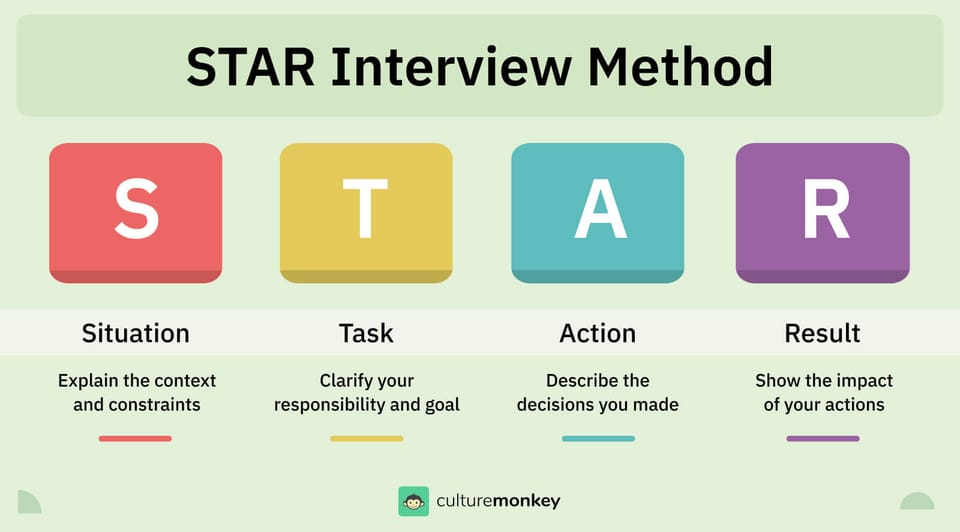
STAR method interview questions are structured prompts that ask candidates to explain a situation, action, and result to assess real past behavior clearly.